HR wellbeing: build on your EAP, not just its usage report
You're carrying employee concerns, manager questions and a budget review—sometimes before lunch. The truth is, an HR wellbeing strategy needs more than a benefit people can call. It needs everyday workplace support and a clear route to qualified help when that's needed.
Find the gap before you change providers
Ask whether employees know how to access your EAP, whether its hours and channels fit their schedules, and what happens after a referral. Low use is a reason to investigate awareness, trust and access—not proof that the service is worthless.
Make managers part of the plan
Give managers practical language for workload conversations, achievable priorities and protected breaks. Psychological safety means people can raise a concern without fearing humiliation or punishment. Don't make employees responsible for coping with work you haven't made manageable.
Personalize support without asking for a diagnosis
Offer choices for different schedules, access needs, neurodiverse working styles and caregiving or midlife pressures. Ask what would make work easier rather than collecting personal health histories. Let employees choose whether to disclose anything sensitive.
Choose a clear EAP relationship
Keep your EAP if it meets your needs. Consider complementary proactive support if the gap is everyday stress and engagement. Consider replacement only after reviewing counseling, referrals, urgent support, eligibility and local coverage. Providers' scope varies; confirm it rather than assuming the labels match.
Set a manageable review rhythm
Name an owner for rollout and communications, choose a baseline and review employee feedback alongside aggregate participation, absence and retention. Confirm who can see data and how small groups are protected. HR reporting shouldn't become individual health surveillance.
Your wellbeing matters here, too. Share ownership with managers and leadership instead of turning every employee concern into an HR-only task. Use the support planner to outline workplace actions without naming employees, then discuss SoulSync's AI-plus-therapist approach and current capabilities in a demo.
Estimate wellbeing ROI with your own assumptions
Start the conversation with SoulSync
For workplace-level guidance, see the U.S. Surgeon General's framework for workplace mental health and wellbeing.
Your team's next step
Your workplace wellbeing support plan
You're carrying a lot. What's showing up for your team? Start with the challenges you're noticing, not the names behind them.
The Problems You're Facing
The Four Challenges Keeping HR Leaders Up at Night
EAP Access and Awareness
Ask why
If usage is lower than you'd hoped, check awareness, confidentiality concerns, access hours and referral follow-through. Low use doesn't mean your EAP has no value—or that employees have no need for support.
Benefits Costs Under Scrutiny
Validate
You're being asked to show value. Review the full cost of support with your benefits adviser, but don't promise lower claims from a wellbeing rollout. Claims trends need context and time.
Workload and Burnout
Listen first
When people feel stretched, another resource link isn't enough. Ask about staffing, priorities and recovery time, and involve managers in changes employees can feel in their working day.
Retention Pressure
Your baseline
Use your own departure and replacement-cost data. Look for themes in voluntary feedback without assuming every resignation has the same cause or monitoring individual employees for risk.
What You Actually Need
A Wellness Platform That Gives You Visibility and Impact
You don't need another benefit to administer without a clear purpose. SoulSync combines AI and therapist-informed proactive wellbeing. Bring these questions to your demo so you can confirm the available support and reporting:
Reporting and Privacy
Ask to see current reporting, how participation is defined and how small teams are protected from re-identification.
AI With Clear Boundaries
Ask how AI guidance is reviewed and when qualified human support is needed. A model output is not a diagnosis or a prediction of resignation.
Whole-Person Support
Confirm the scope of therapist-informed support, care access, employee eligibility and any services that carry additional costs.
A Manageable Rollout
Confirm onboarding tasks, accessibility, integrations and who owns employee communications before agreeing a launch date.
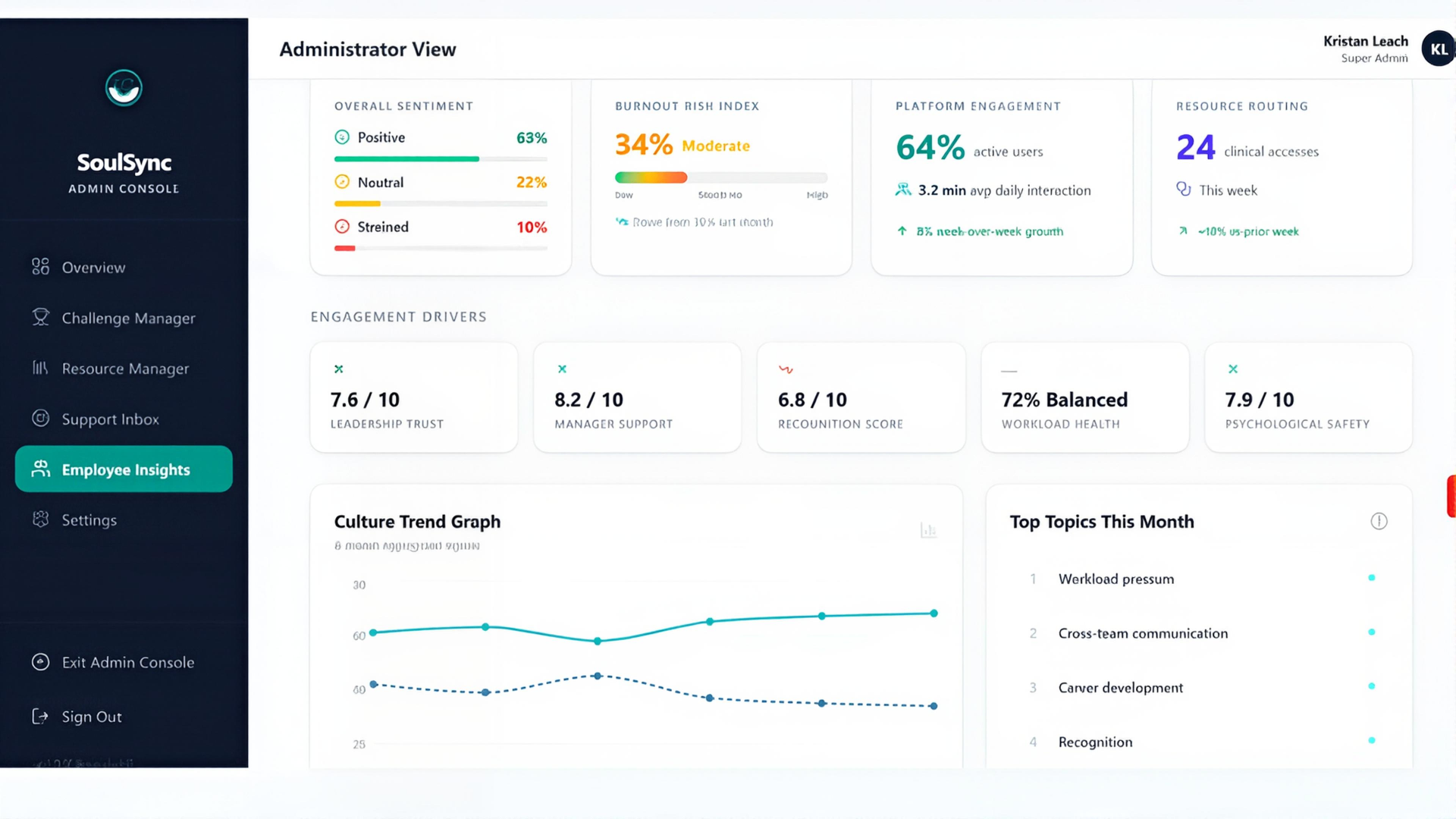
Your team's wellbeing data — at a glance.
The Workforce Is Changing
ADHD, Neurodiversity & the Midlife Workforce
Your workforce isn't one-size-fits-all. Neurodiverse employees, midlife professionals and caregivers may need different options. Ask how your existing EAP and any new program address those needs rather than assuming one service covers everyone.
Late-Diagnosed ADHD in the Workforce
Some employees find focus, planning or switching tasks harder than others. Clear priorities, flexible working approaches and accessible support can be part of your conversation without asking anyone to disclose a diagnosis.
Midlife Women Are Burning Out Silently
Women in their 40s and 50s are navigating perimenopause, caregiving, career pressure, and identity shifts — simultaneously. Traditional wellness programs don't acknowledge this reality. SoulSync does, because our founder lives it.
Neurodiversity Without Labels
Not every employee wants to discuss a diagnosis. Ask what helps them work well and offer choices. During your SoulSync demo, ask how the current support fits different working styles and what information employees are asked to share.
The Business Case
Wellbeing ROI Your CFO Can Review
Costs
Validate your full budget
Access
Define participation
Voice
Listen to employee feedback
Review
Compare consistent periods
Your business case gets stronger when it uses your own costs and clearly labeled assumptions. Compare EAP fees, implementation time and any complementary support with plausibly attributable benefits. Don't import a published return multiplier as a promise for your team.
Use the wellbeing ROI calculator to explore hypothetical turnover and absenteeism savings. Its gross estimate isn't net ROI or evidence that SoulSync caused an improvement. Validate the assumptions with finance before committing a budget.
Before & After
Your HR Wellbeing Strategy: Questions Before You Switch
| Dimension | Review Your EAP | Ask About SoulSync |
|---|---|---|
| Access | Which channels and hours are available? | How does everyday support fit employees' schedules? |
| Scope | What care and referrals are included? | What support complements—or replaces—current coverage? |
| Reporting | How are users and outcomes counted? | Can you see current reporting examples? |
| Privacy | What is shared with your employer? | Who can access information and how are small groups protected? |
| Administration | Who owns communications and renewal? | What rollout tasks and integrations are required? |
| Costs | What are your full annual fees? | What additional costs and contract terms apply? |
| Evaluation | What baseline can you establish? | Which measures will you review together? |
Related Resources
Continue Your Research
The Modern EAP Alternative
Why growing companies are replacing their EAP with a proactive, data-driven wellness platform.
Burnout Prevention Software
Detect burnout early with AI-powered monitoring and personalized interventions.
Wellness for Small Business
No minimums, no enterprise pricing — built for teams of 10–50.
Wellness for Remote Teams
Async-first support designed for distributed and hybrid workforces.
Wellness for Midsize Teams
Scalable, compliance-ready wellness for companies with 50–500 employees.
Small Business Wellness Guide
A practical guide to launching employee wellness without enterprise budgets.
Common Questions
What HR Leaders Ask Us
Looking for a Proactive EAP Alternative for Your Team?
Book a free 30-minute demo and see how SoulSync transforms workplace wellbeing — from reactive to proactive, from generic to genuinely personal.
Page last updated: November 2026