If you're here, you've probably already tried an Employee Assistance Program (EAP). And if you're being honest? It didn't work the way you hoped it would.
You rolled it out. You announced it. You paid for it. And then… almost no one used it. Many employees hesitate to seek help due to concerns about how others might perceive them, and stigma around mental health issues can prevent employees from seeking help through traditional EAPs.
Across the country, HR leaders are quietly frustrated with traditional employee assistance programs. Utilization rates sit between 2–5% (Behavioral Health Business, 2025). That means 95–98% of your team isn't using the benefit you're paying for.
Growing companies deserve something better. Modern employees expect more than a helpline; they want accessible, proactive, and personalized wellbeing support.
Background
Introduction to Employee Assistance Programs
Employee Assistance Programs have been around for decades — designed to provide mental health support and resources that help employees resolve personal and work-related challenges. At their core, EAPs offer confidential counseling, crisis management, and referral services.
Despite their good intentions, most traditional employee assistance programs struggle with low engagement. Employee usage data consistently shows that only 2–8% of the workforce takes advantage of these benefits. This means most employees are not receiving the mental health care they need.
Modern EAP alternatives have emerged to better meet the needs of today's workforce. These new solutions focus on making mental health support more accessible, flexible, and personalized — with features like same-day sessions, unlimited access to licensed counselors, and digital tools for quick access to care.
Leading providers like Lyra Health and Modern Health exemplify this new generation of comprehensive solutions — offering digital platforms, personalized coaching, and high-quality care that help employees manage stress, navigate life transitions, and address mental health issues before they escalate.
The Problem
Why Companies Are Looking for an EAP Alternative
"We technically have an EAP… but it doesn't really help."
Here's what HR leaders are frustrated about:
- Employees don't use it
- Access feels clunky or outdated
- It only activates in crisis mode
- There's no data to prove impact
- It feels designed for a 10,000-person company — not a 50-person team
The traditional EAP was built decades ago around a reactive model: waiting until someone is in distress, then offering a few short-term therapy sessions and a referral list. But work has changed. Mental health has changed. Employee expectations have changed. The support model hasn't.
Deep Dive
The Real Problems With Traditional EAPs
Utilization Rates of 2–5%
Industry-wide EAP utilization sits at 2–5%. That means if you have 100 employees, only 2–5 people will access the program each year. For comparison, digital mental health platforms see 25–40% utilization.
Low engagement = low impact. And low impact means you're essentially buying insurance you hope never gets used — instead of building a culture of prevention and support.
Reactive-Only Design
Traditional EAPs activate after something goes wrong — burnout, panic attacks, workplace conflict, substance misuse. By the time someone reaches out, they're often already overwhelmed.
There's no early detection. No proactive check-ins. No ongoing engagement. Just a phone number and a limited number of sessions. That's not prevention — that's damage control.
Session Caps and Wait Times
Most EAPs cap therapy at 3–6 sessions per issue. The national average wait time to see a therapist is 25 days. When someone is anxious, depressed, or burned out, three weeks feels like forever.
So what happens? They disengage. They power through. They call in sick. They quit.
No Meaningful Data for HR
Traditional EAP reporting typically includes total call volume, number of cases opened, and broad issue categories. It does not tell you whether stress levels are rising, which departments are struggling, or whether interventions actually improved outcomes.
You're left blind — writing renewal checks without insight.
Built for Enterprise, Sold to Everyone
Most legacy EAP providers were designed for large enterprise contracts — complex contracts, minimum employee thresholds, generic service models, limited customization. A 40-person manufacturing company does not have the same needs as a 50,000-person corporation. Growing teams need flexibility, visibility, and engagement. Not a call center.
The Solution
What a Modern EAP Alternative Actually Looks Like
Proactive, Not Reactive
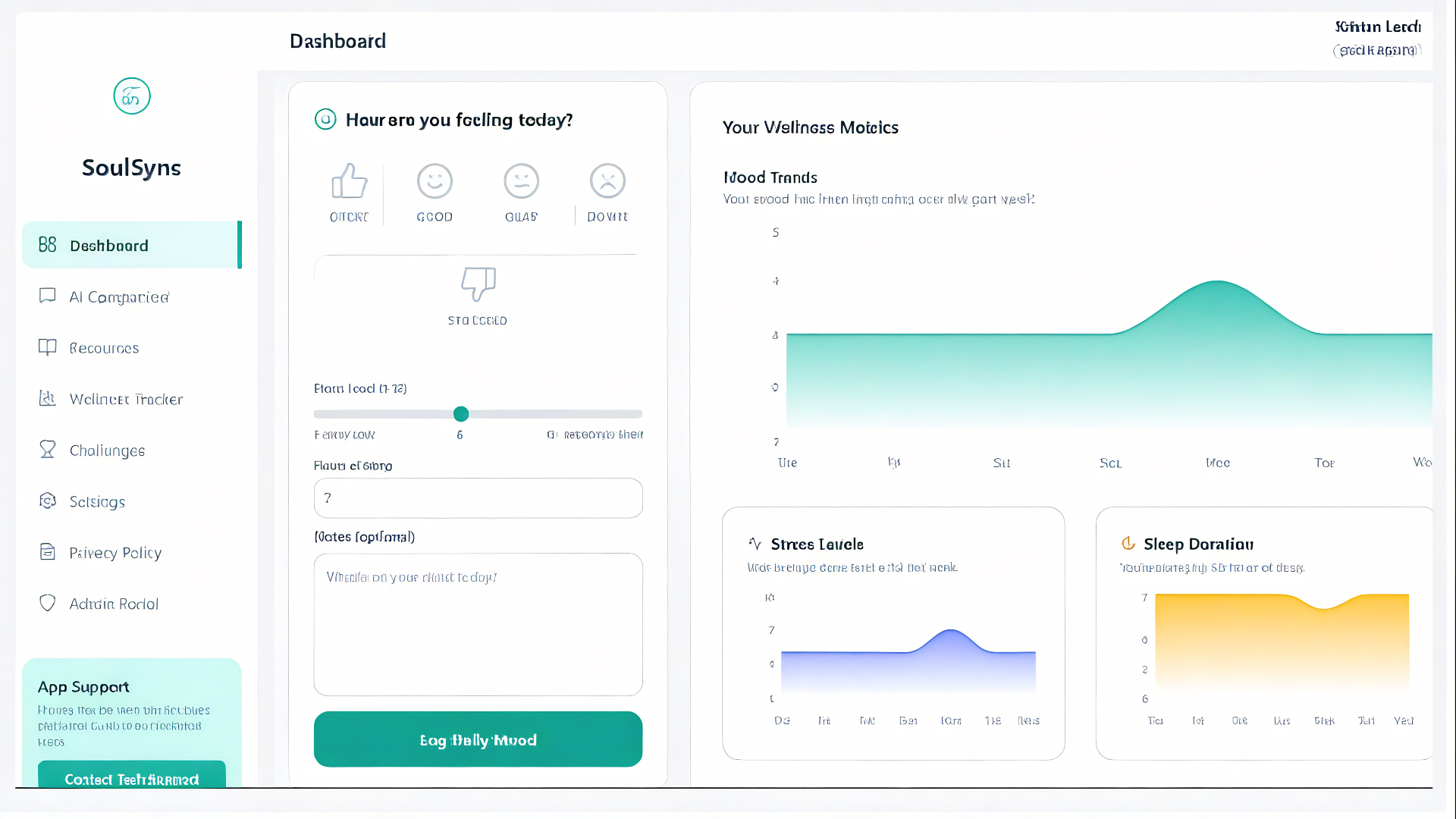
SoulSync measures stress, emotional well-being, physical health, relationship strain, and burnout indicators. Employees complete brief assessments that flag risk early. The system nudges support before performance declines.
AI-Powered Early Warning
AI-driven pattern recognition detects burnout trends, isolation signals, escalating stress patterns, and engagement drop-offs. Instead of 'Call this number if you're in crisis,' employees get: 'Here are three things you can do this week to feel better.'
Whole-Person Approach
Mental health support, stress management tools, physical health tracking, relationship education, group challenges, webinars, and access to therapists, physicians, and coaches — all in one ecosystem.
Real Human Support
AI does triage and personalization. Humans step in for care. Employees connect to licensed therapists, coaches, medical providers, group sessions, and educational workshops — with fast, clear access.
Data HR Can Actually Use
SoulSync provides anonymized, aggregated dashboards showing:
- Stress trends over time
- Burnout risk levels
- Engagement patterns
- Participation rates (25–40%)
- Department-level heatmaps
- Pre/post intervention improvements
Comparison
SoulSync vs. Traditional EAP — Side-by-Side
| Feature | Traditional EAP | SoulSync |
|---|---|---|
| Utilization Rate | 2–5% | 25–40% typical engagement |
| Access Model | Phone-based, reactive | App-based + proactive outreach |
| Wait Times | 25-day national average | Rapid triage + guided pathways |
| Session Limits | 3–6 sessions | Flexible, needs-based support |
| HR Reporting | Basic usage counts | Real-time wellness dashboards |
| Proactive Detection | None | AI-powered early risk detection |
| Whole-Person Support | Therapy only | Mind, body, stress, relationships |
| SMB Fit | Built for enterprise | Designed for 10–200 employees |
| Pricing Model | Per-employee annual | Transparent, scalable |
This isn't a slight improvement. It's a different model.
Ideal Fit
Who SoulSync Is Built For
Primary Audiences
- Companies with 10–200 employees
- HR managers tired of low EAP engagement
- Founders who care about culture
- Organizations seeing burnout rise
- Teams with hybrid or remote employees
- Businesses wanting measurable wellness ROI
Especially Powerful For
- Healthcare teams
- Manufacturing
- Professional services
- Education organizations
- Growth-stage companies
If you want a box to check, stick with a traditional EAP. If you want measurable impact, consider switching.
Outcomes
Results Our Customers See
- 5–10x higher utilization than previous EAP
- Earlier burnout detection
- Increased engagement in wellness initiatives
- Reduced sick days tied to stress
- Higher employee satisfaction scores
- Clearer visibility into team wellness trends
More importantly: they stop guessing. They start leading with data.
Common Questions
Frequently Asked Questions
Summary
The Bottom Line
Traditional employee assistance programs were built for a different era. Low utilization (2–5%), long wait times (25 days national average), reactive crisis model, minimal HR visibility.
You deserve more than that.
SoulSync is a modern EAP alternative designed specifically for growing teams who want proactive support, real engagement, actionable data, whole-person care, and measurable ROI. If you've had a bad EAP experience, you're not wrong. You're ready for something better.
From the Blog
Related Reading
Let's Show You What Proactive Employee Wellness Actually Looks Like
Book a demo and see SoulSync in action.
Book a DemoPage last updated: September 2026