Nobody Is Using Your Wellness Program. Here's the Actual Reason.
July 30, 2026

Key Takeaways
- "They don't know about it" is rarely the real cause of low utilization.
- The three real blockers: friction, confidentiality doubt, and irrelevance.
- Diagnose before you re-launch — another email campaign won't move a trust problem.
Every HR leader has had this quarter: you rolled out something genuinely good, and participation sits in the single digits. The instinct is to communicate harder. Usually that's the wrong lever.
Blocker 1: Friction
Count the steps between "I need help" and "I have help." If it's more than three, your utilization is capped no matter what you communicate. Separate logins, intake forms, eligibility checks, and a callback window are each a place where someone quietly gives up.
Fix: Measure time-to-first-support. Anything over 48 hours reads as unavailable to someone in distress. Industry benchmarks are worth a look — see EAP utilization benchmarks.
Blocker 2: Confidentiality Doubt
Employees assume that anything routed through HR eventually reaches their manager. It's usually untrue and almost always believed. In a company of 40 people, that fear is amplified — everyone knows everyone.
Fix: State the data boundary in plain language, repeatedly, and show what leadership can and cannot see. Aggregate-only reporting should be a headline, not a footnote. Build on psychological safety fundamentals or the message won't land.
Blocker 3: Irrelevance
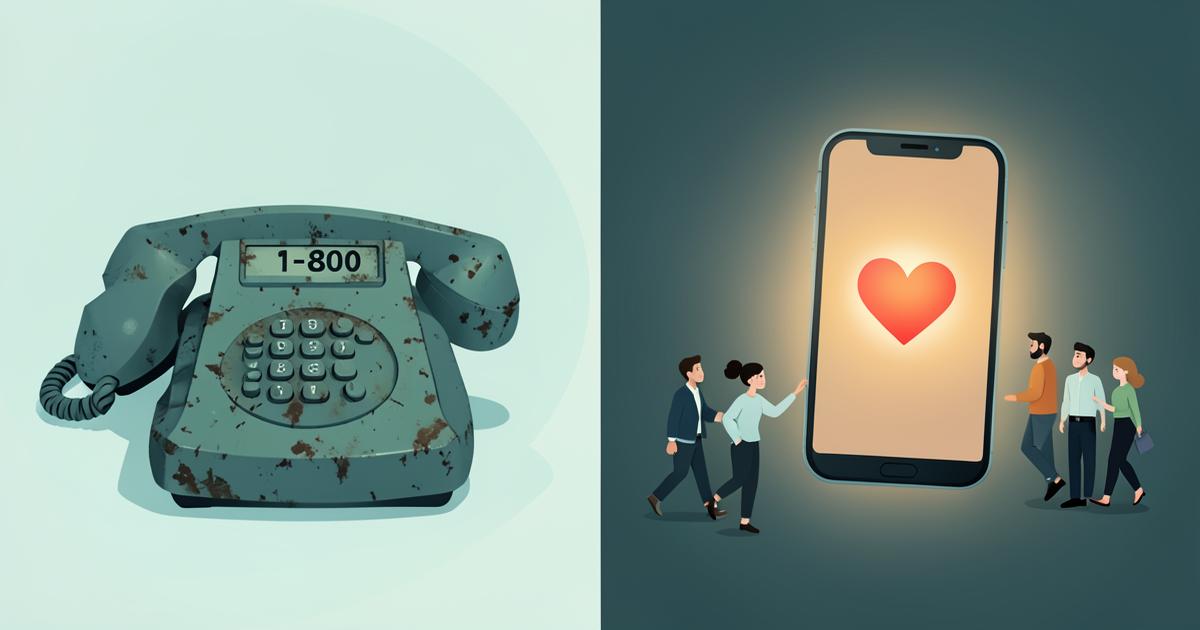
Crisis-oriented benefits get crisis-level usage. Most employees aren't in crisis — they're stretched, sleeping badly, and managing a difficult season. If your program only speaks to acute need, most people correctly conclude it isn't for them.
Fix: Lead with everyday relevance — workload, sleep, conflict, caregiving, transitions — and let clinical support sit underneath it. That's the core difference explored in why employees don't use traditional EAPs.
A 30-Day Diagnostic
- Walk the access path yourself, start to finish, and time it.
- Ask five employees what they think happens to their data. Their answers are your comms plan.
- Review what your program actually offers against what people are dealing with this quarter.
- Check whether managers can name the offering in one sentence. If not, that's the gap.
Frequently Asked Questions
What's a realistic participation rate?
Traditional EAPs commonly land in the low single digits. Modern proactive platforms should do substantially better because they address everyday stress, not only crisis moments.
Should we incentivize participation?
Incentives lift the first month and rarely the sixth. Fix friction and trust first; incentives amplify a good program and can't rescue a bad one.
How do we measure this without violating privacy?
Track aggregate engagement, time-to-first-support, and repeat usage. You never need individual-level data to know whether a program is working. See how to measure wellbeing without surveys.
Built for the 90% who aren't in crisis.
SoulSync removes the friction and the confidentiality doubt that keep traditional programs unused.
Keep Reading

Get insights like this delivered to your inbox
Join HR leaders and wellness advocates receiving evidence-based workplace mental health insights.